




Keynote Speakers
| Keynote 1: Silicon Photonic Biosensors for Portable Diagnostics | |
| Session Chair: TBD | |
| Time: Monday, September 21 - 9:15-10:15 | |
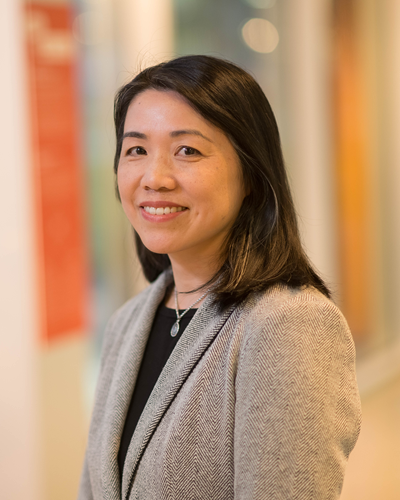 |
Karen Cheung
Bioengineering Professor |
Quantitative, longitudinal measurement of molecular signals remains a fundamental challenge at the interface of nanoscale devices, biological systems, and information processing. Hormones provide a compelling, and historically underserved, testbed for this challenge: they are dynamic, multi-analyte biochemical signals that encode physiological state over time, yet existing technologies cannot simultaneously achieve sensitivity, multiplexing, temporal resolution, and accessibility.
In this keynote, I will present our recent work on microfluidics-integrated silicon photonic (SiP) biosensors for multiplexed molecular detection, with a current focus on hormone monitoring for women’s health and a broader vision toward generalizable molecular communication systems. Using arrays of sub-wavelength grating microring resonators fabricated in mature semiconductor processes, we demonstrate simultaneous detection of multiple analytes on a single chip, with each sensor individually addressable and functionalized. We combine on-chip sandwich and competitive immunoassays with quantum-dot-based signal amplification to achieve high sensitivity in complex biofluids, enabling longitudinal measurement in clinically relevant concentration ranges.
A key enabler of this platform is robust surface chemistry. I will discuss our recent advances in polydopamine-mediated biofunctionalization coupled with optimized antifouling strategies, which significantly suppress nonspecific binding while preserving receptor activity. These results establish a scalable and broadly applicable approach to selective molecular sensing.
While hormone monitoring motivates the present work, the underlying architecture is intentionally general. By integrating dense sensor arrays, automated microfluidics, and optical readout, this platform supports information-dense molecular sensing across multiple analytes at physiologically relevant concentrations. Beyond single-device use, this architecture naturally extends to distributed, on-chip chemical sensing networks, where coordinated sensor arrays enable collective measurement of molecular signals over space and time. The keynote will highlight how such technologies translate ensemble molecular dynamics into quantitative information, bridging nanotechnology and biophysics while establishing a practical experimental interface for studying systems-level and information-theoretic models of molecular signaling.
Short Biography
Karen C. Cheung is a Bioengineering Professor in the Department of Electrical and Computer Engineering at UBC. Cheung received her BSc and Ph.D. degrees in Bioengineering from the University of California, Berkeley, in 1998 and 2002, respectively. From 2002–2005, she was a postdoctoral researcher at the Ecole Polytechnique Fédérale de Lausanne, Switzerland. Her research interests include lab-on-a-chip systems for cell culture and characterization, inkjet printing for tissue engineering, and implantable neural interfaces.
[Back to Program]
| Keynote 2: Molecular communication in mating and metastasis | |
| Session Chair: TBA | |
| Time: Wednesday, September 23 - 9:00-10:00 | |
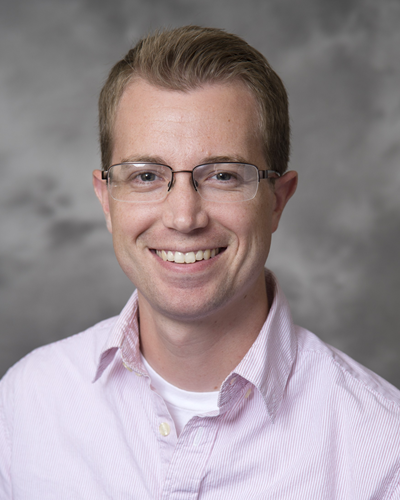 |
Andrew Mugler
Associate Professor |
Long-range cell-cell communication is mediated by diffusible molecules. The random nature of diffusion and the finite number of molecules place limits on the fidelity of this communication. I will describe two examples where cells face these limits: yeast cell mating and cancer cell metastatic invasion. In the first case, two yeast cells communicate using pheromone molecules, but unexpectedly they also secrete enzymes that degrade each other's pheromone. I will show how this counterintuitive strategy improves the fidelity of the communication. In the second case, a cancer cell "self-communicates" in the presence of fluid flow to detect the flow direction. Self-communication is washed out at high cell density, leading to broader insights about how cells make decisions. Both examples illustrate the physical constraints imposed by diffusive molecular communication and the active strategies cells use to contend with or transcend these constraints.
Short Biography
Andrew Mugler received his BS in Physics at Harvey Mudd College in 2004, received his PhD in Physics at Columbia University in 2010, held postdoctoral positions at AMOLF and Emory University, and began his Physics faculty position at Purdue University before moving to the University of Pittsburgh. He leads a theory group focusing on the physics of molecular sensing, cell growth, and microbial ecology, often in collaboration with experimental groups. He was a Simons Investigator in the Mathematical Modeling of Living Systems (2015-2020) and received the NSF CAREER Award (2021-2026) and the NIH MIRA Award (2025-2030). He directs the Artists in Residence program at the University of Pittsburgh and is an Advocacy Champion for the American Physical Society.
[Back to Program]