



Invited Talks
| Invited Talk 1: The fitness value of information: Kelly bets, semantic information, and biological information processing | |
| Session Chair: TBA | |
| Time: Wednesday, September 23 - 10:30-12:00 | |
 |
Andrew Eckford
Associate Professor |
It is widely believed in the biophysics community that information theory can be used to study biological communication - but how can this be, when there are no error-correcting codes in nature? To address this important puzzle, we consider Kelly betting: in an information-processing investment game, such as the growth of a population of organisms in a changing environment, Kelly betting is a method that uses received information to maximize the expected log rate of growth. In this talk, we discuss how Kelly bets are closely related to optimal single-letter codes, so that natural information processing systems can achieve information-theoretically optimal performance with trivial computational resources. Expressing such systems in terms of rate-distortion theory, we show that the rate-distortion tradeoff for an investment game has a simple linear bound, and that the bound is achievable at the point where the corresponding single-letter code is optimal. We discuss some “post-Shannon” generalizations of this idea, such as in semantic and subjective information. Finally, we show that there exists some experimental evidence that nature does indeed maximize mutual information, and we suggest some avenues for future experimentation.
Short Biography
Andrew Eckford is an Associate Professor in the Department of Electrical Engineering and Computer Science at York University, Toronto, Ontario. His research interests include the application of information theory to biology, and the design of communication systems using molecular and biological techniques. His research has been covered in media including The Economist, The Wall Street Journal, and IEEE Spectrum. His research received the 2015 IET Communications Innovation Award, and was a finalist for the 2014 Bell Labs Prize. He is also a co-author of the textbook Molecular Communication, published by Cambridge University Press. Andrew received the B.Eng. degree from the Royal Military College of Canada in 1996, and the M.A.Sc. and Ph.D. degrees from the University of Toronto in 1999 and 2004, respectively, all in Electrical Engineering. Andrew held postdoctoral fellowships at the University of Notre Dame and the University of Toronto, prior to taking up a faculty position at York in 2006. He has held courtesy appointments at the University of Toronto and Case Western Reserve University. In 2018, he was named a Senior Fellow of Massey College, Toronto.
[Back to Program]
| Invited Talk 2: Biophysics and Carbon Transport in the Sea Surface Microlayer | |
| Session Chair: TBA | |
| Time: Wednesday, September 23 - 10:30-12:00 | |
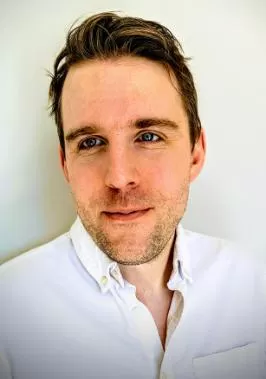 |
Joe Fitzgerald
Assistant Professor |
 |
Jeanette Wheeler
Assistant Professor |
The sea surface microlayer (SML) is a millimetre-scale layer of seawater at the very surface of the ocean that acts as the interface between the ocean and atmosphere. The SML is very important from a climate perspective because of its role in air-sea gas exchange: The ocean absorbs about one third of anthropogenic carbon emissions each year, and each molecule of CO2 absorbed must pass through the SML before entering the sub-surface ocean. This absorption is slowed by the ‘skin effect’: because CO2 is absorbed at the ocean surface, CO2 builds up there and the atmosphere ‘sees’ an ocean surface enriched in CO2, which slows diffusive absorption.
This talk will discuss a potential biological mechanism for enhancing ocean CO2 uptake based on bacterial bioconvection. Observations and laboratory experiments show that dense bacterial communities can develop in the SML, driven in part by the presence of beneficial nutrients at the ocean surface which bacteria swim towards using a process known as chemotaxis. When bacteria accumulate in very high concentrations, they enhance the local seawater density and can drive fluid circulations similar to those arising in thermal convection. These circulations can stir CO2 and reduce the skin effect, leading to enhanced CO2 uptake. We will discuss recent experimental and modelling results investigating this mechanism.
We will conclude our talk by connecting this work to concepts in molecular communication (MC), especially how MC methods can be applied to the SML system to experimentally measure the biophysical structure of the SML, which is essential for understanding the physics of carbon transport.
Short Biography
Dr. Joe Fitzgerald is an Assistant Professor in the Department of Physics & Physical Oceanography at Memorial University of Newfoundland (MUN). Prior to his appointment at MUN, Joe was the Foster and Coco Stanback Postdoctoral Fellow in Global Environmental Science at Caltech. Joe’s research focuses on the fluid dynamics of the environment, ranging from large-scale oceanography and meteorology to microscale ocean biophysics.
Dr. Jeanette Wheeler is an Assistant Professor in the Department of Biology at Memorial University of Newfoundland (MUN). Prior to her appointment at MUN, she was a postdoctoral researcher in Environmental Engineering at ETH Zürich. Jeanette’s research focuses on marine microbial and plankton ecology, and how fluid dynamics shapes microscale interactions in the plankton.
[Back to Program]