1st ACM International Conference on Nanoscale Computing and Communication
Atlanta, Georgia, USA, May 13-14, 2014
1st ACM International Conference on Nanoscale Computing and Communication
Atlanta, Georgia, USA, May 13-14, 2014


Keynote Speakers
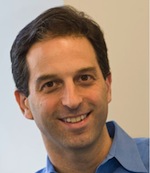 |
Ron Weiss Professor, Biological Engineering |
Synthetic Biology: From Parts to Modules to Therapeutic Systems
Abstract
Synthetic biology is revolutionizing how we
conceptualize and approach the engineering of
biological systems. Recent advances in the field are
allowing us to expand beyond the construction and
analysis of small gene networks towards the
implementation of complex multicellular systems with
a variety of applications. In this talk I will
describe our integrated computational / experimental
approach to engineering complex behavior in a
variety of cells, with a focus on mammalian cells.
In our research, we appropriate design principles
from electrical engineering and other established
fields. These principles include abstraction,
standardization, modularity, and computer aided
design. But we also spend considerable effort
towards understanding what makes synthetic biology
different from all other existing engineering
disciplines and discovering new design and
construction rules that are effective for this
unique discipline. We will briefly describe the
implementation of genetic circuits and modules with
finely-tuned digital and analog behavior and the use
of artificial cell-cell communication to coordinate
the behavior of cell populations. The first system
to be presented is a genetic circuit that can detect
and destroy specific cancer cells based on the
presence or absence or specific biomarkers in the
cell. We will also discuss preliminary experimental
results for obtaining precise spatiotemporal control
over stem cell differentiation for tissue
engineering applications. We will conclude by
discussing the design and preliminary results for
creating an artificial tissue homeostasis system
where genetically engineered stem cells maintain
indefinitely a desired level of pancreatic beta
cells despite attacks by the autoimmune response,
relevant for diabetes.
Short Biography
Dr. Ron Weiss, Ph.D., Professor of Biological
Engineering & Electrical Engineering Computer
Science, and Director, MIT Synthetic Biology Center,
is a member of Program 1. The Weiss Laboratory seeks
to create integrated biological systems capable of
autonomously performing useful tasks, and to
elucidate the design principles underlying complex
phenotypes. The lab addresses cancer research
challenges through the design and delivery of new
genetic circuits. For example, the lab has designed
cancer classifier circuits capable of identifying
target cancer cell lines by sensing and responding
to differences in the concentration of multiple
microRNAs within a cell. The lab is currently
working to both refine miRNA profiling techniques in
order to gain high resolution and dynamic gain and
to extend the capability of multi-input sensors to
assess a variety of cellular phenotypes relevant to
cancer, including proliferation state, metabolic
state, and repair states. A scalable platform to
rapidly fabricate and evaluate large libraries of
single and multi-input sensors is being built using
a new open source microfluidic platform. In
addition, the lab continues to refine cancer
classifier circuit architecture to improve
selectivity and reduce size in order to accommodate
inclusion in viral vectors and other delivery
modalities. To this end the lab is constructing a
new HSV1-based viral vector using a Bacterial
Artificial Chromosome (BAC) between UL37 and UL38 of
the HSV-1 genome. Finally, the lab is working to
ensure that transient gene circuit operation does
not significantly impact healthy cells.
[Back to Program]
 |
Peter J. Burke Professor, Electrical Engineering and Computer Science |
Towards a Single-cell Radio
Abstract
In this talk, I will discuss the challenges and
opportunities of THz electronics for the next
generation internet of things. Realistic and
projected scaling laws for nano-radios will be
proposed and presented, with special attention to
the issue of antenna scaling with frequency, size,
and medium (including physiological fluids for
in-vivo applications), as well as power sources (DC,
RF, lightwave).
Short Biography
Peter Burke is a pioneer in nanoelectronics and its
application to biotechnology. He is the recipient
numerous awards including Young Investigator award
from the Office of Naval Research, the Young
Investigator Program award from the Army Research
Office. His lab has made fundamental contributions
to nanotube and graphene electronics,
nanoelectromagneitcs, as well as microchip based
instrumentation for nano-electrophysiology and
metabolomics. He received the Ph.D. degree in
physics from Yale University, New Haven, CT, in
1998. From 1998 to 2001, he was a Sherman Fairchild
Postdoctoral Scholar in physics at the California
Institute of Technology, Pasadena. He is currently a
Professor in the Departments of Electrical
Engineering & Computer Science, Chemistry &
Materials Science and Engineering, and Biomedical
Engineering at the University of California,
Irvine.
[Back to Program]
You are visitor:
since August 29, 2013.